Network and fleet management has long traded long-range optimization against day-of reality, with neither side seeing the full cost
Air-OS plans, replans, and recovers in one model; continuously matching aircraft, capacity, and crews to live demand, disruption, and maintenance signals
Capability for Network Resilience
Predictive airline network
and fleet management
at machine speed
Movement Control
Predict and pre-empt disruptions
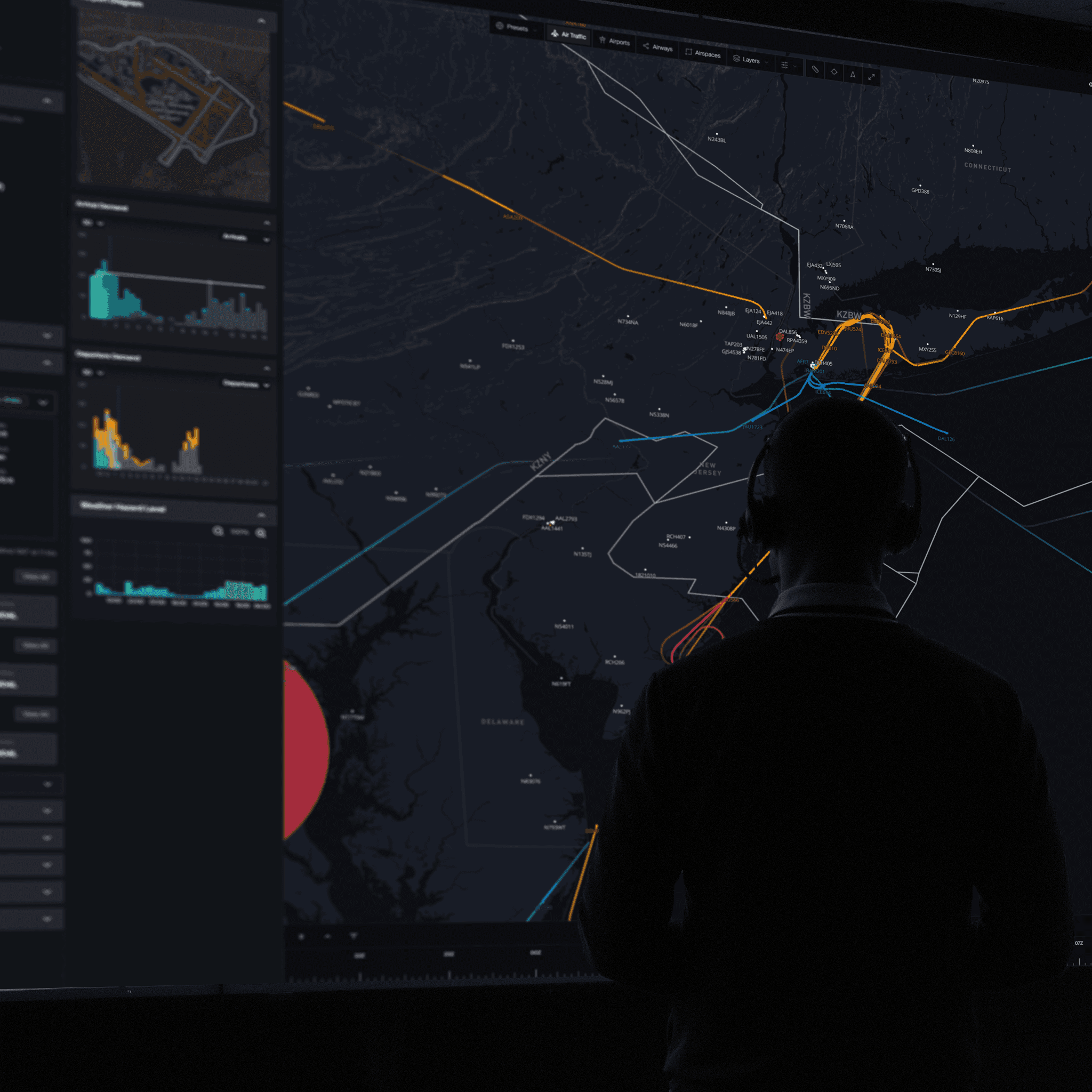
Air-OS connects all data streams: ARINC 424, AMM, OIS, NAS, SWIM, ADS-B, and advanced weather data feeds, continuously forecasts demand-capacity gaps, weather-driven IROPs, and system bottlenecks. Operators see where disruption is forming and receive clear mitigation strategies in advance.
Platforms
Predict imbalances
before they become disruptions
Capabilities
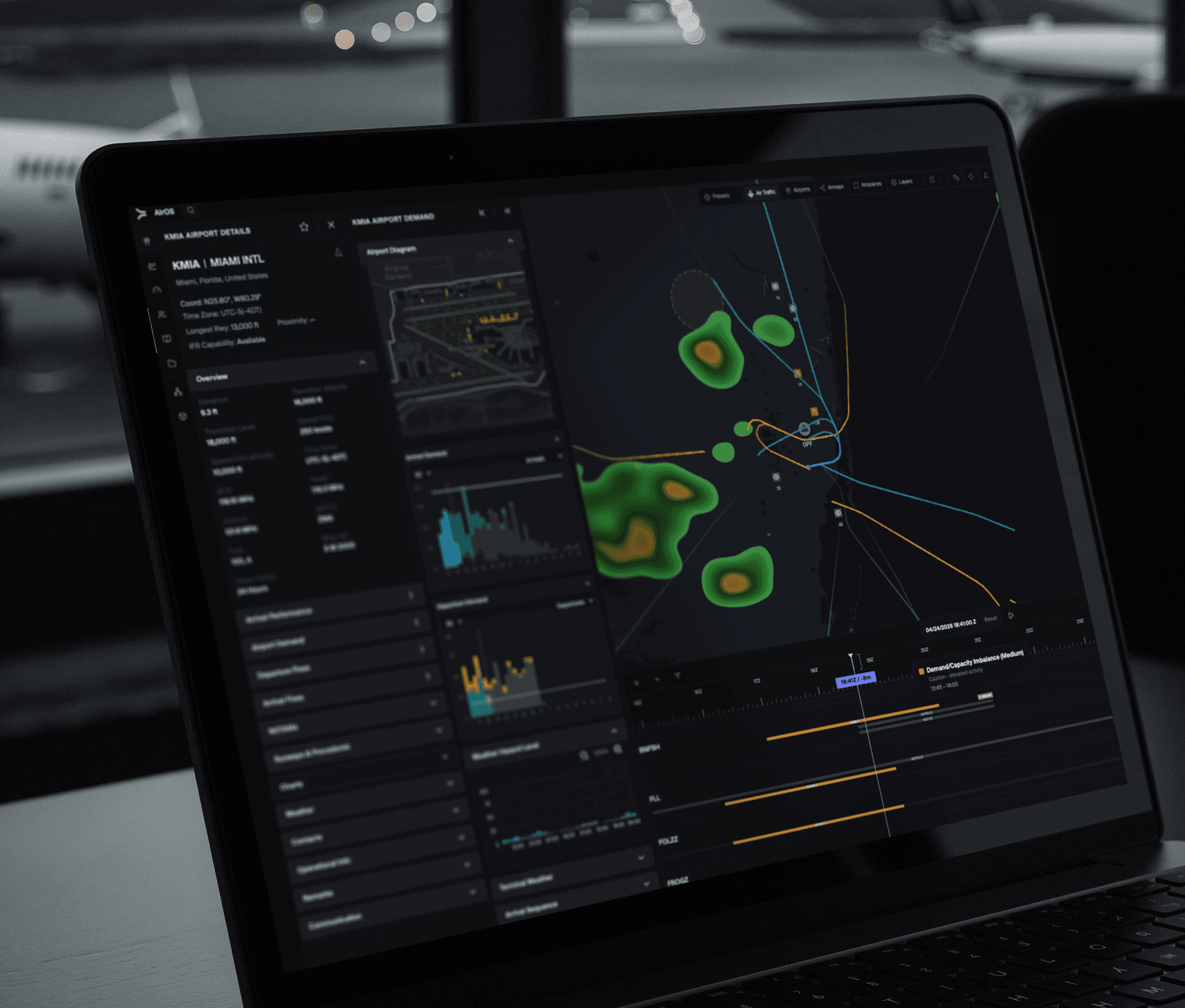
AI-Enabled Congestion Prediction
Air-OS forecasts where and when airport and airspace imbalance will form before disruption materializes. By continuously modeling filed demand against traffic flow restrictions, ADS-B, weather, runway and taxiway availability, NOTAM-driven closures, and system advisories, it pinpoints emerging congestion across airports, procedures, and constrained flow paths.
Capabilities
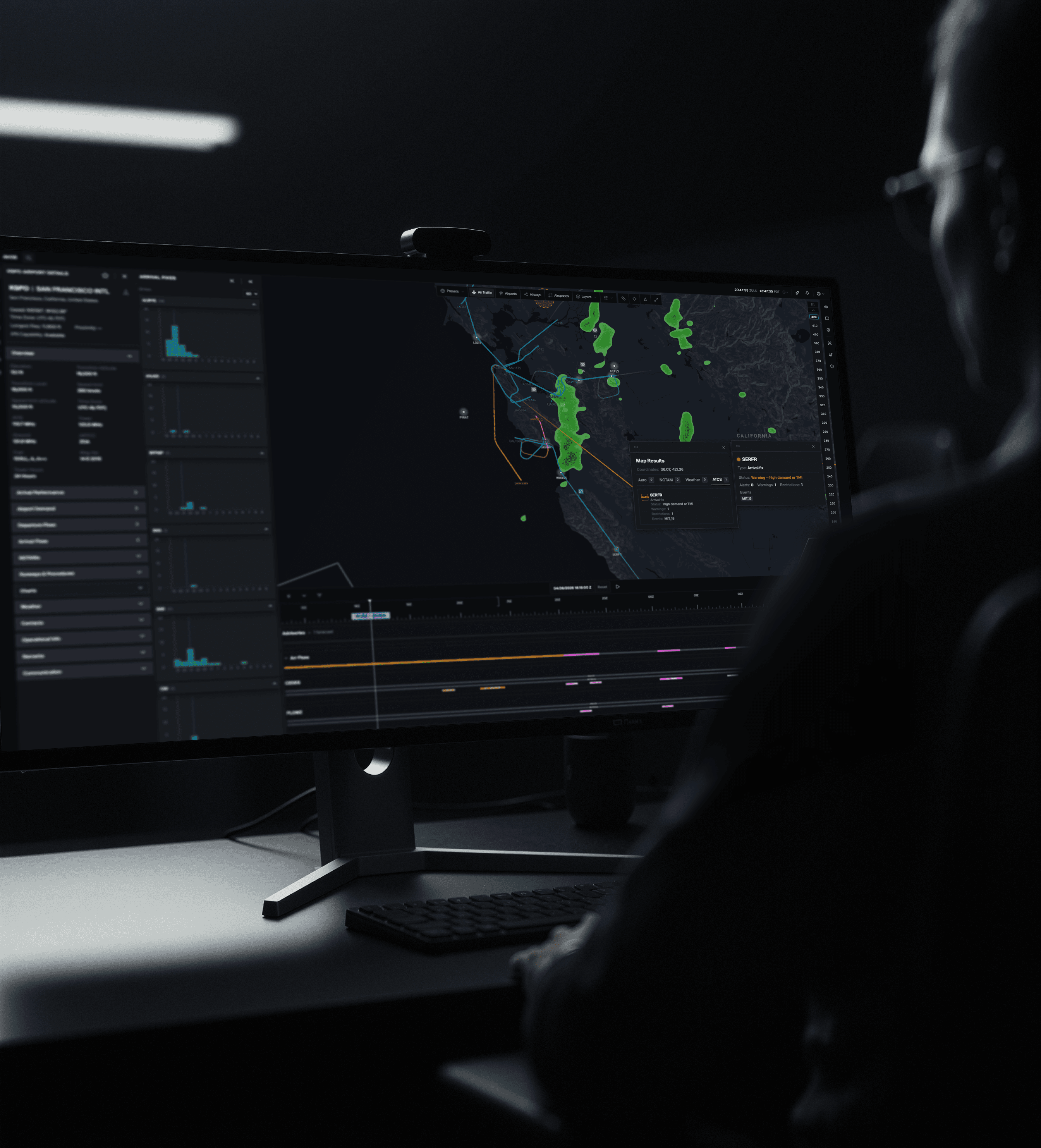
Airline-Specific Impact Detection
Air-OS doesn’t just alert operators, it evaluates trade-offs, surfaces recommended departure adjustment or reroutes, and auto-coordinates the decision across stakeholders. Dispatchers, station managers, and ATC chiefs all operate from the same live picture.
Capabilities
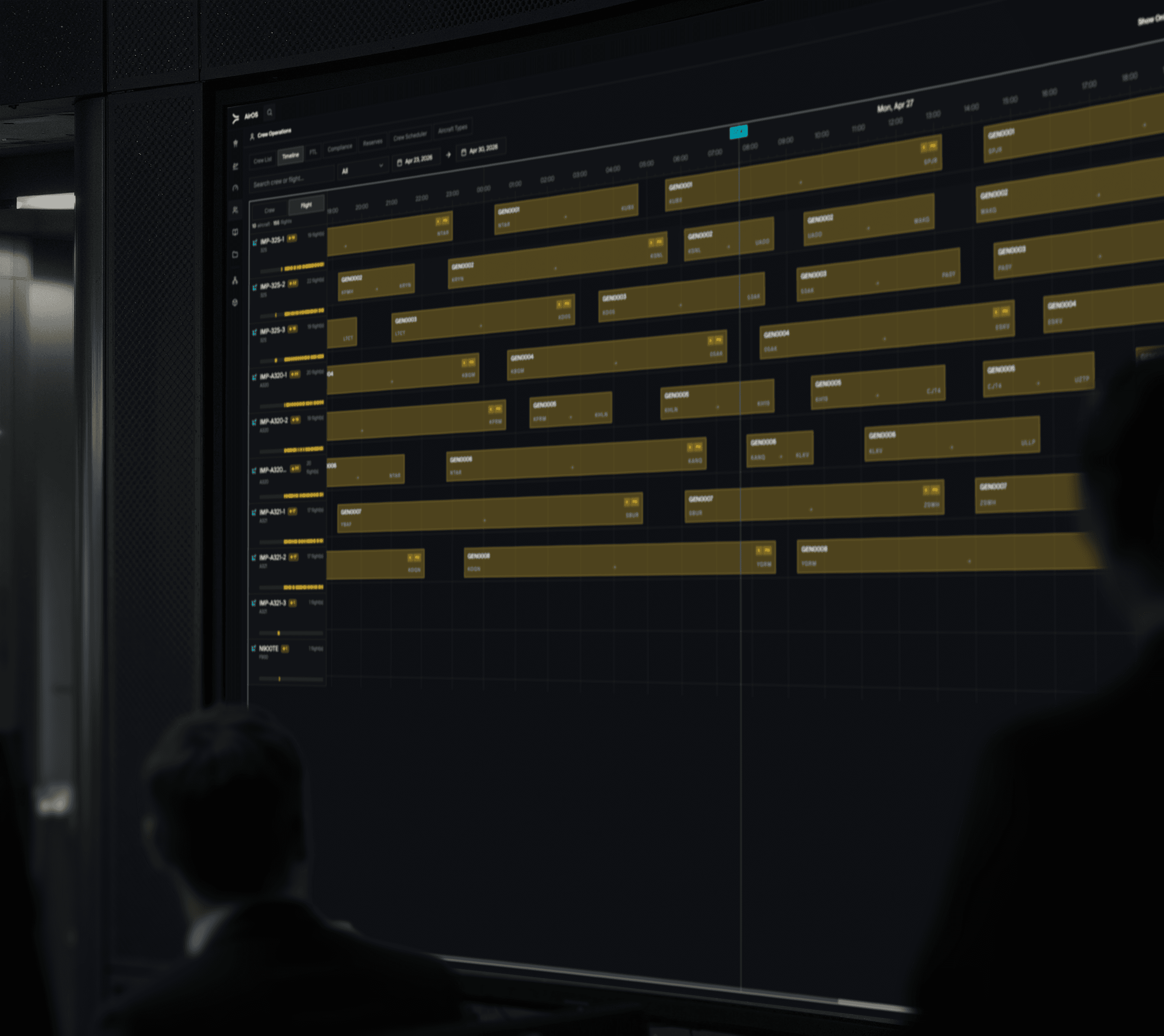
Network-Aware Response
When disruptions hit, Air-OS simulates cascading impacts and recommends adaptive strategies to minimize cost, delay, and passenger disruption. Execution is instantly communicated to all roles, making the network self-recovering instead of reactive.
Highlights
" transform="translate(31.398 9)" width="11.659399999999998px"/><path d="M 0 12.179 L 0 0 L 11.659 0" fill="transparent" height="12.178899999999999px" id="cPLVC9igB" stroke-dasharray="" stroke-linecap="butt" stroke-linejoin="bevel" stroke-width="2" stroke="rgb(255, 255, 255)" transform="translate(31.398 30.822)" width="11.659399999999998px"/><path d="M 11.873 0 L 11.873 12.179 L 0 12.178" fill="transparent" height="12.179079999999999px" id="uYoNE8Cix" stroke-dasharray="" stroke-linecap="butt" stroke-linejoin="bevel" stroke-width="2" stroke="rgb(255, 255, 255)" transform="translate(8.502 9)" width="11.873009999999999px"/><path d="M 11.873 12.179 L 11.873 0 L 0 0.001" fill="transparent" height="12.179100000000002px" id="l8rAegUe9" stroke-dasharray="" stroke-linecap="butt" stroke-linejoin="bevel" stroke-width="2" stroke="rgb(255, 255, 255)" transform="translate(8.502 30.822)" width="11.873009999999999px"/><path d="M 0 7 C 0 3.134 3.134 0 7 0 C 10.866 0 14 3.134 14 7 C 14 10.866 10.866 14 7 14 C 3.134 14 0 10.866 0 7 Z" fill="transparent" height="14px" id="u09VBgXG2" stroke-dasharray="" stroke-linecap="butt" stroke-linejoin="miter" stroke-miterlimit="10" stroke-width="2" stroke="rgb(255, 255, 255)" transform="translate(18.334 19)" width="14px"/></svg>)
What-If Simulations
Context-aware actions ranked by cost, safety, and efficiency.
" transform="translate(12.667 8)" width="27px"/></svg>)
Decision Recommendations
AI models surface emerging disruption from weather, ATC, crew, and fleet signals before operational thresholds are breached, giving teams the lead time to act rather than react.

" height="33.8652px" id="Dpp0Um1L1" transform="translate(9.334 9)" width="33.6035px"/></svg>)
Unified Operating Picture
One ontology-driven truth across NOC, ATC, and flight operations.

" transform="translate(4.333 16)" width="44px"/></svg>)
Auto-Coordination
Decisions synced instantly to all roles without manual updates.
" height="36.083980560302734px" id="EWOvuCOpn" transform="translate(12 7.916)" width="29px"/></svg>)
Low-Touch Integration
Modular APIs extend Air-OS into existing airline systems.
" height="16.574367798826742px" id="EYpcBUGSk" transform="translate(17.163 16.428)" width="25.589899999999997px"/><path d="M 39.251 33.767 L 39.998 35.432 L 35.933 39.996 L 34.438 38.666 L 37.021 35.767 L 8.566 35.767 L 10.564 33.767 Z M 6.277 0.756 L 6.277 29.568 L 4.277 31.571 L 4.277 2.946 L 1.311 5.519 L 0 4.008 L 4.622 0 Z" fill="rgb(255, 255, 255)" height="39.9961015625px" id="PUngFU3JH" transform="translate(6.333 6.333)" width="39.99799957427978px"/></svg>)
Post-Event Analysis
Replay and audit network decisions for training and reporting.

" transform="translate(12 3.5)" width="16px"/><path d="M 11 4 L 4 4 C 2.961 4 1.9 3.8 1 2 L 0 0" fill="transparent" height="4px" id="k77C0jUMT" stroke-dasharray="" stroke-linecap="butt" stroke-linejoin="miter" stroke-miterlimit="10" stroke-width="1.4" stroke="rgb(255, 255, 255)" transform="translate(4 10.5)" width="11px"/><path d="M 16 0 L 10 0 C 7.629 0 5.638 0.9 4.5 3 L 0 11" fill="transparent" height="11px" id="otCnazCMj" stroke-dasharray="" stroke-linecap="butt" stroke-linejoin="miter" stroke-miterlimit="10" stroke-width="1.4" stroke="rgb(255, 255, 255)" transform="translate(12 17.5)" width="16px"/><path d="M 11 0 L 4 0 C 2.961 0 1.9 0.2 1 2 L 0 4" fill="transparent" height="4px" id="iJX71G3eE" stroke-dasharray="" stroke-linecap="butt" stroke-linejoin="miter" stroke-miterlimit="10" stroke-width="1.4" stroke="rgb(255, 255, 255)" transform="translate(4 17.5)" width="11px"/></svg>)